


I’m interested in learning anatomy from the inside out.
The traditional way anatomy is taught is through a textbook where you memorize various parts: organs, muscles and bones (usually ignoring the fascia) to then answer questions like “identify the ligaments in the lateral collateral ligament complex of the ankle that may be involved in a common ankle strain.“
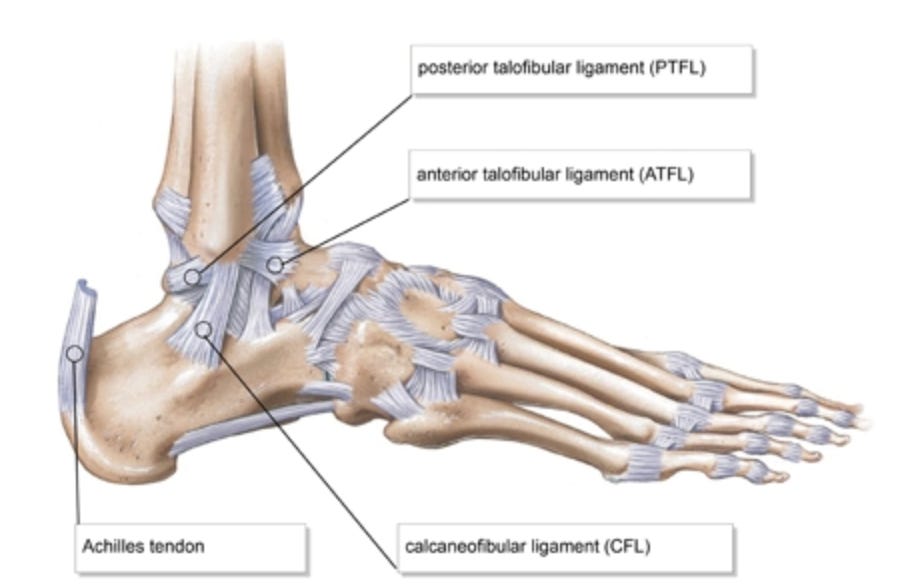
I want to be able to feel the structures inside my body — I don’t care much about learning all the names.
It turns out there’s an inspiring community around doing just this. I’ve been learning from a senior teacher, Mark Chandlee Taylor, who has been excellent.
The Nervous System
First topic is the nervous system.
Mark suggests approaching it from six angles:
I. Micro-mapping - nerves, neurons, glia
II. Three Brains - neuron clusters around brain, heart, gut
III. Location - Central vs peripheral
IV. Inflow/outflow - Sensory vs motor neurons
V. Somatic vs Autonomic
VI. Levels of engagement - Sympathetic/Parasympathetic balance
The exercise involve touch, movement, visualization which then becomes embodiment.
I. Micro-mapping
Prompts:
Neurons
Recall the cell body of a neuron, its axon which projects outward to other neurons, its dendrites which connect to other cells’ axons.
Your torso is the soma of a neuron, your left arm is the axon, and your other limbs are dendrites. Floating in a sea of liquid, you can sense keenly but you cannot move. At some point, like the beginning of a sneeze, you feel an impulse that travels all along your body towards your left arm. Building, and building, until it bursts through your left arm like a sneeze. ACHOO!
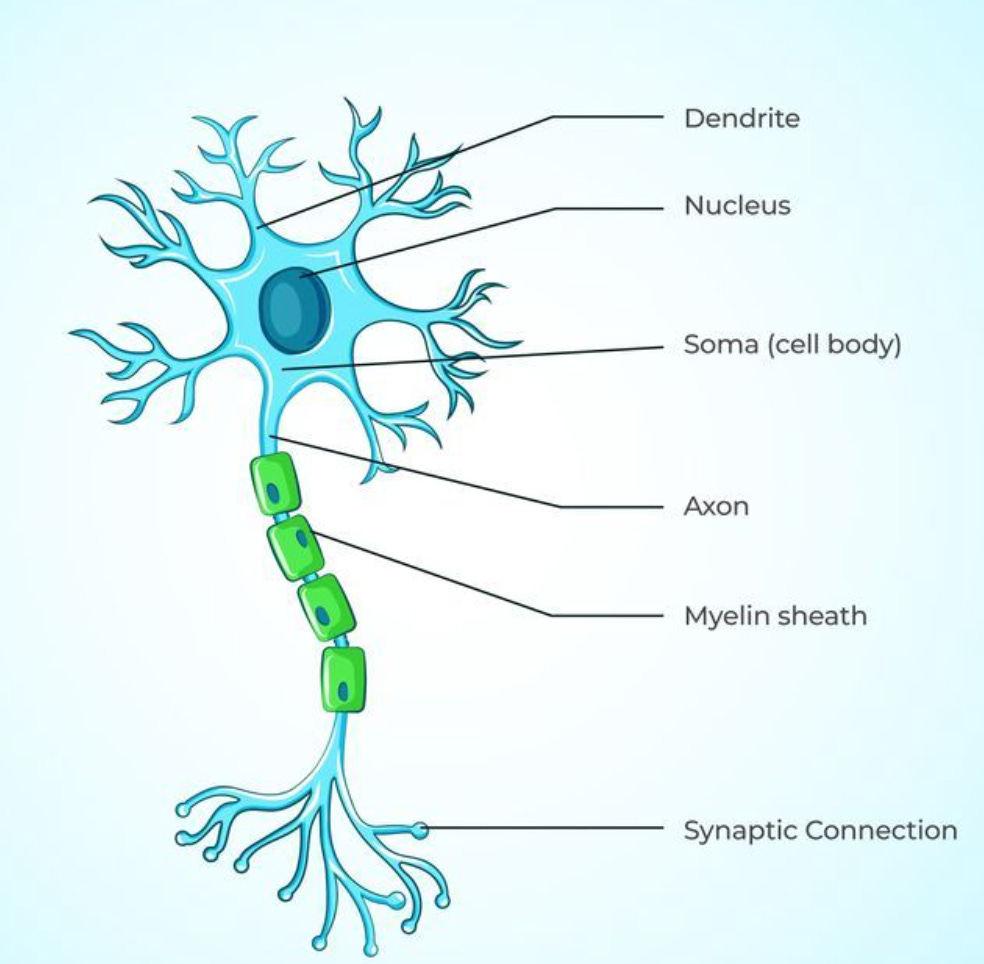
Note: contrary to the standard visualizations that depicted neurons as basically static wires, neurons literally bulge as the action potential happens, like a tube of toothpaste being squeezed. It is fluid and electrical.
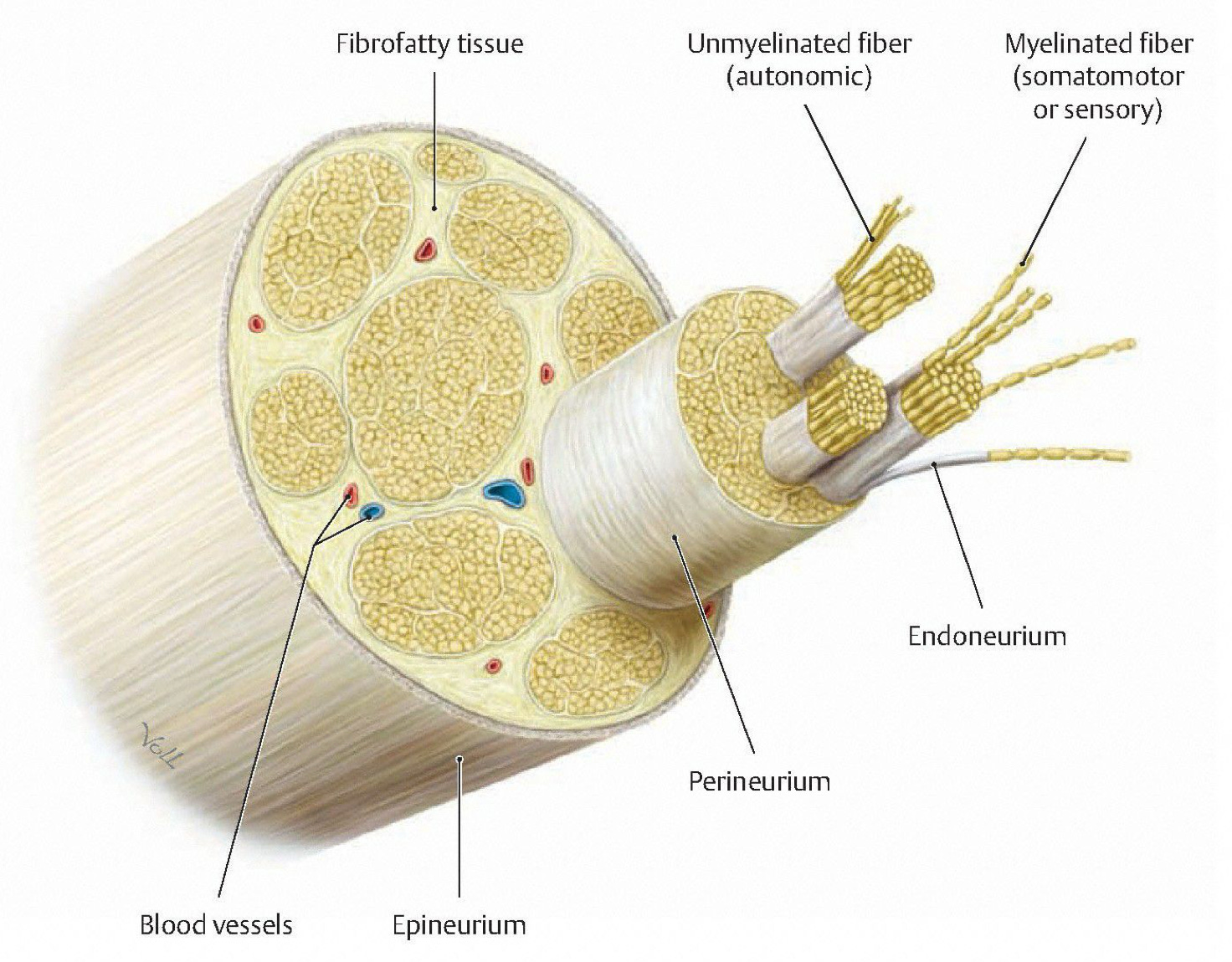
Glial cells are crucial supporting structures in the brain. The fatty myelin sheath
Warm your hands and apply a thin layer of oil around a willing partner’s hand. Their hand is a nerve — a bundle of parallel axons, live, pulsing, moving, and your hand is the outer layer of myelin, covering the bundle of axons. Feel the fluid, fatty nature of the myelin. Then swap, and feel what it is to be wrapped with a myelin sheath as an action potential fires.
Neurotransmitters
Acetylcholine - sitting in a field, watching wind blow through the grass. You see a pattern appear between the grasses of different heights. The short grasses flicker then are still, the taller grasses sway for a little longer before subsiding, like a deep wave in the sea. You watch this pattern, focused calm inside.
Dopamine - you’re hunting at the edge of a forest clearing, waiting for the animal to appear. You lean forwards, anticipation raising — ready to go but not yet. Just, almost, ready, almost. You can feel it’s close, rustling nearby. Your hairs raise.
Norepinephrine - the animal appears, and to your surprise, it turns towards you, staring you down. It begins to charge. You feel heat spreading in your chest, time thickens as your eyes widen. Baring your teeth, you raise the spear, ready to plunge it forwards.
GABA - the fight is over. you are back at the camp, staring into a warm fire. You rest back into your chair, surrounded by the others. Taking a breath, you toss a friend some meat.
Serotonin - as you settle, you feel a deeper relief — you survived, and you are now safe. A pleasant warmth fills your face