


Our nervous system has billions of neurons and glias cells linked by dozens of nerves throughout the body. How can we distinguish and feel the differences?
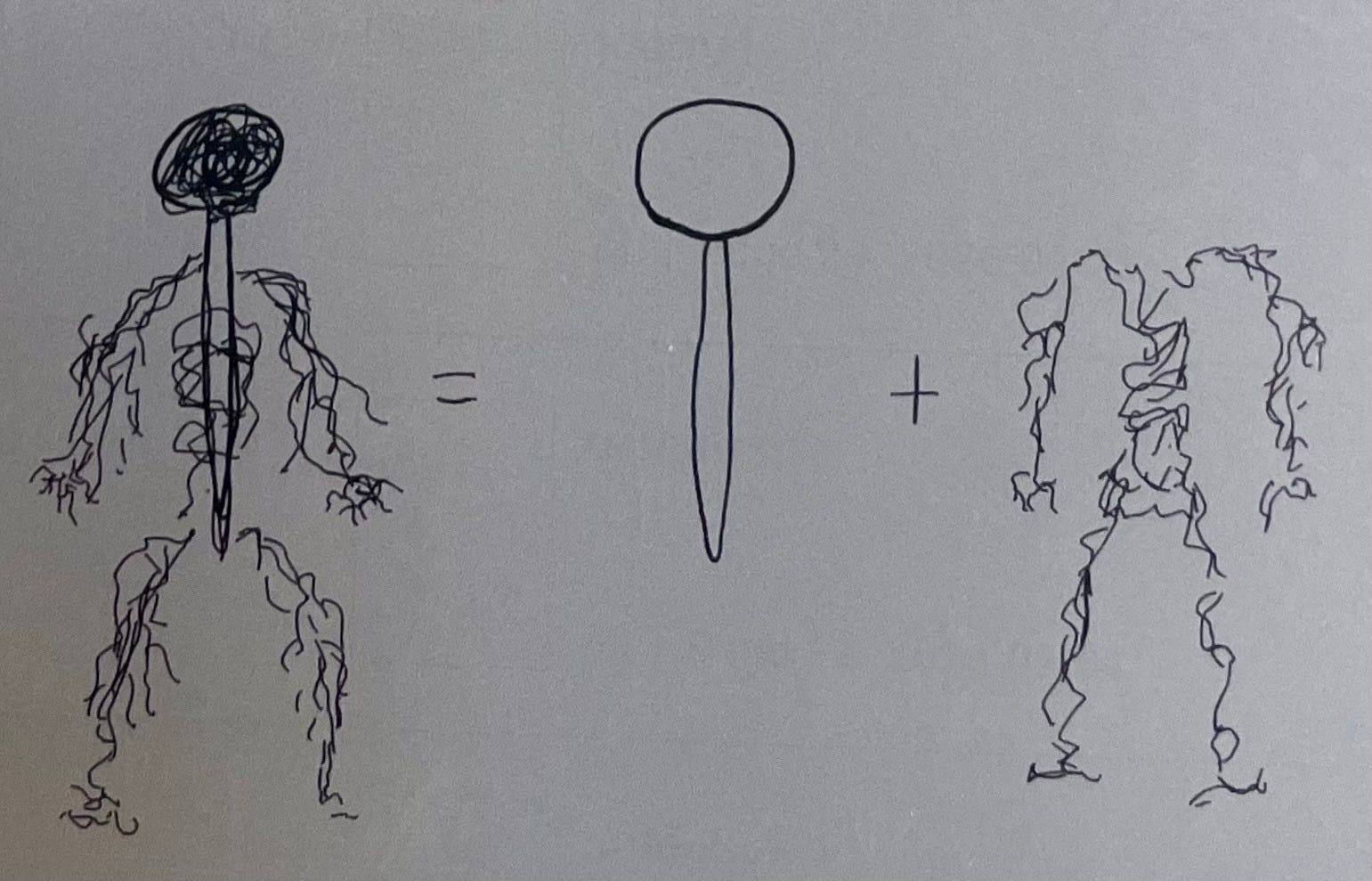
The first distinction to notice is that most of the neurons near the center are encased in bone — the skull and spine. There are also many neurons and nerves wrapped around bone and muscle at the periphery. We can call these two parts of the network of nerves and neurons the central nervous system and the peripheral nervous system.
Practice: Feeling the Difference
Embodying the Central Nervous System
Stand up and feel the shape of your skull, including the small bumps and asymmetries. Breathe into the skull, letting your breath be like air in a large cathedral — feeling the depth and space within. Now feel the weight of all the neurons, tissue, and connective matter in the skull, and let gravity begin to pull your skull down toward the earth. Feel the neurons inside the spine and their weight too. Let yourself come to lie on the ground so your skull is touching the floor.
Let the weight of your brain and spine initiate movement, and slowly roll on the ground. Notice that in each position there is a slight settling as the meninges — the membrane between the skull and the brain — shift slightly, and the skull itself moves and settles in response. After doing this, you may begin to feel like a brain and spine with limbs attached. This is embodying the central nervous system.
Embodying the Peripheral Nervous System
Pat the entire surface of your body, including your inner thighs, midsection, and back. Feel the slight vibration or buzzing in your skin. Try to breathe into the vibration at the surface of your skin and let your body move from that awareness. This is the most direct way to feel the peripheral nervous system.
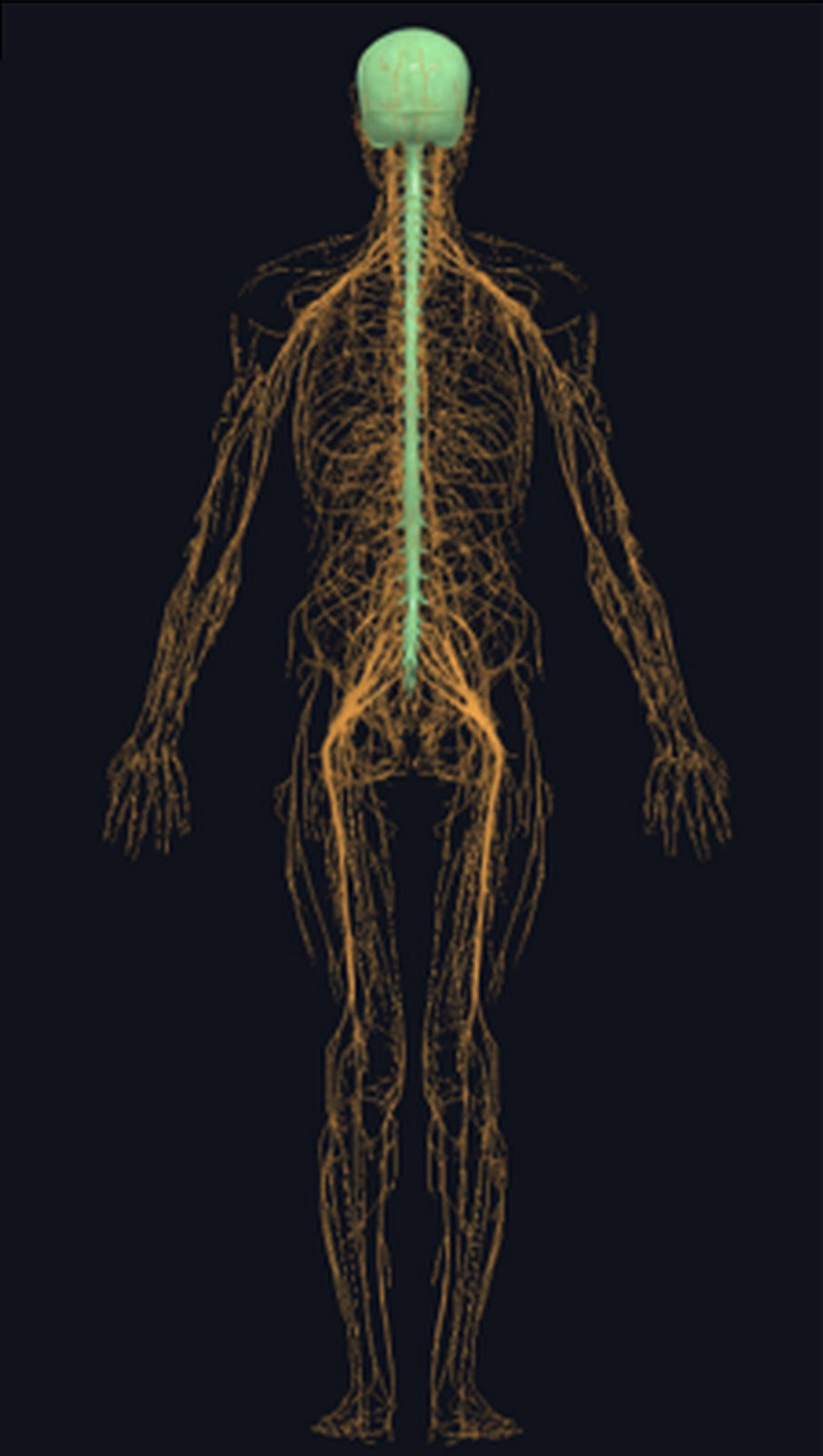
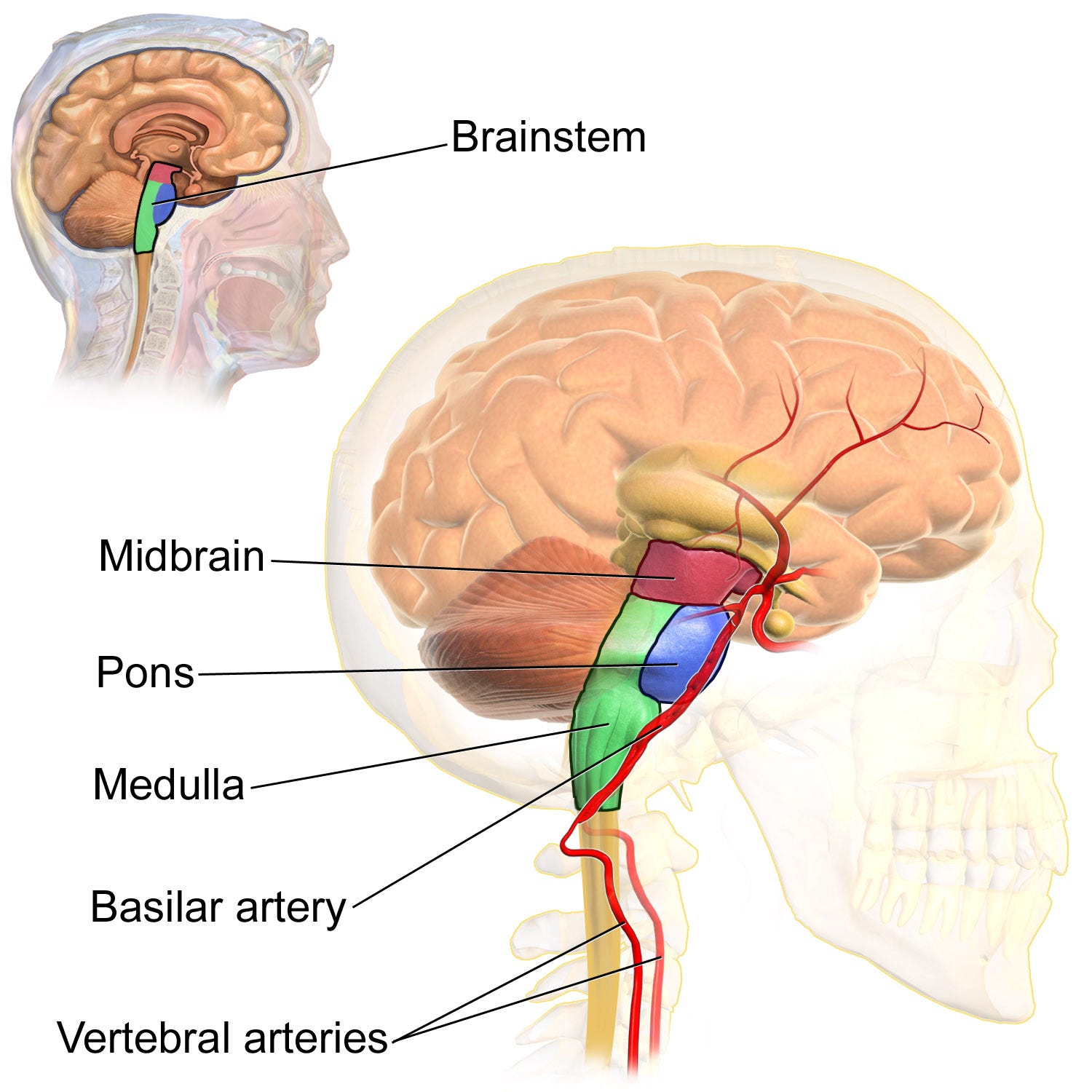
We can also get more precise and actually feel specific parts of our central nervous system. Let’s explore the brainstem.
Practice: Breathing in the Brainstem
Bring your middle fingers to the bony ridge just below each ear — not the jaw, but the mastoid process on the skull. Find the midpoint between your fingers in your awareness. This is the approximate location of the brainstem. Don’t strain to find it. You may feel a slight buzzing or tingling when you locate the spot.
Bring your breath into that point and allow yourself to breathe from there. It may help to begin with your eyes closed and breathe for a minute or two. As you do this, notice what other sensations arise.
We can do this with other regions of the brain, which we’ll explore in future editions.

Max, is this practice of sensing the brainstem your own or from another body of work? Loved it and curious to learn more